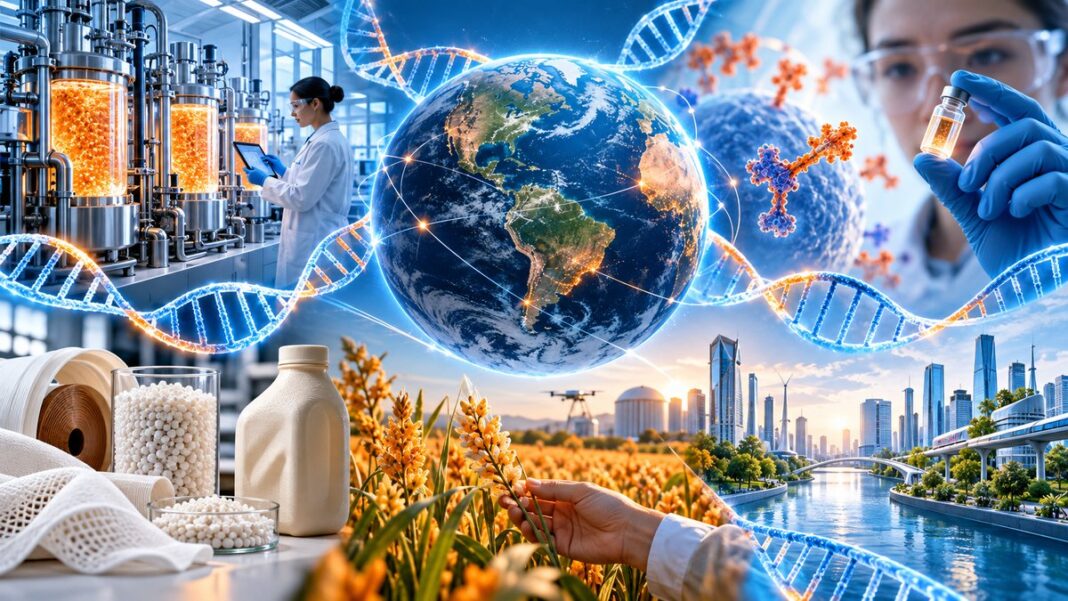

Synthetic biology applications are moving from research laboratories into medicine, food, materials and environmental work. The field combines biology with engineering to design or improve living systems. Its potential is broad, but real progress depends on evidence, safety controls and responsible scale-up.
What synthetic biology applications involve
Researchers start with a biological function, such as producing a molecule or detecting a chemical. They then design DNA, cells or microbial communities to perform that task. Testing shows whether the system works reliably beyond a controlled experiment.
The approach is multidisciplinary. It draws on genetics, microbiology, computation and process engineering. The US National Human Genome Research Institute overview explains the field and several questions surrounding its development.
Synthetic biology applications in medicine and health
In health care, researchers can engineer cells or microbes to produce medicines, detect disease signals or deliver a therapeutic function. Manufacturing with living cells already supports many biologic drugs. Newer systems aim for greater precision, although clinical products face demanding safety and regulatory reviews.
Gene-based treatment is one closely related area. Our guide to gene therapy advances and challenges examines how engineered genetic material may be used in medicine. It also explains why delivery, cost and long-term monitoring matter.
Food and agriculture
Synthetic biology applications in agriculture include stress-tolerant crops, biological pest controls and microbes that support plant nutrition. These tools may improve resilience or reduce selected inputs. However, results depend on climate, soil, farm practice and access to the technology.
Safety assessment must consider the specific organism and trait. The World Health Organization overview of genetically modified foods summarizes common safety questions. See also our detailed article on synthetic biology in agriculture.
Synthetic biology applications in materials and manufacturing
Engineered microbes can make chemicals, enzymes, pigments and polymers. In some cases, biological production may use renewable feedstocks or milder processing conditions. Yet fermentation, purification and transport still require energy and infrastructure, so life-cycle comparisons are essential.
Textiles offer a visible example. Researchers are exploring bio-based fibres, dyes and leather alternatives. Our article on synthetic biology in fashion reviews the performance, scale and sustainability questions.
Environmental uses
In environmental work, synthetic biology applications can detect pollutants or help break down selected compounds. Other projects explore carbon capture, waste conversion and cleaner production. A successful laboratory demonstration is only the first step. Field conditions are variable, and released organisms may require containment or monitoring.
Benefits, limits and governance
The strongest synthetic biology applications solve a defined problem and outperform realistic alternatives. Developers should measure resource use, emissions, safety and durability. They should also consider affordability, access, farmer or patient choice, and possible effects on workers and communities.
Clear governance helps society gain benefits while managing uncertainty. Risk assessment should match the organism, environment and intended use. Transparent evidence and post-release monitoring can support trust. Synthetic biology can transform parts of the world economy, but its value will come from verified outcomes rather than novelty alone.