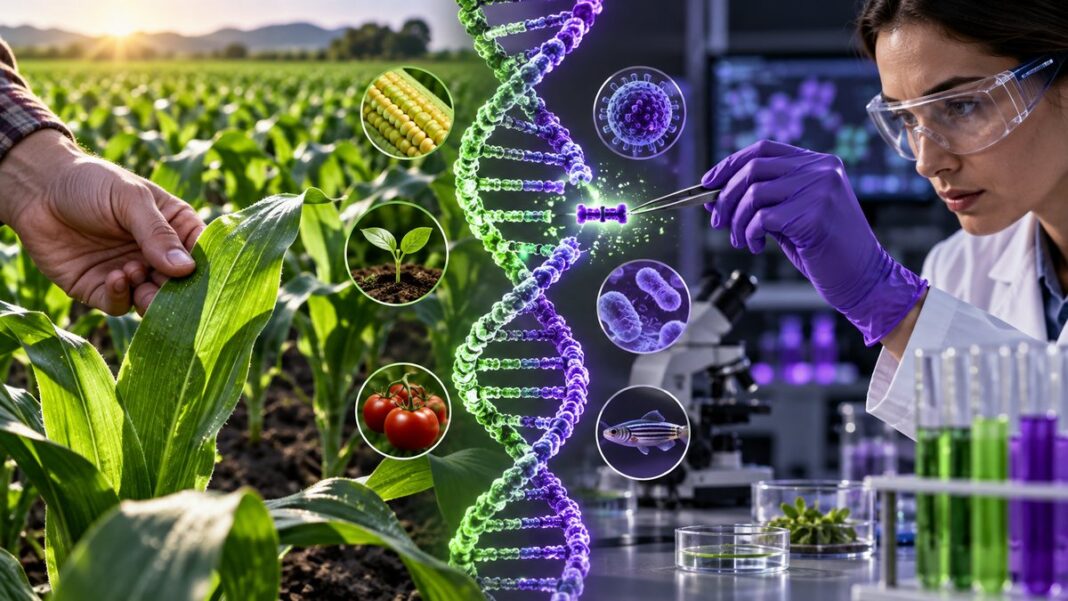

Genetically modified organisms are plants, animals or microbes whose DNA has been changed using modern biotechnology. They are used in agriculture, medicine and industrial production. Each product has different benefits and risks, so evidence should focus on the specific trait, organism and intended use.
What are genetically modified organisms?
Genetic engineering can add, remove or alter DNA to produce a selected characteristic. This differs from conventional breeding because researchers can make more targeted changes. Gene editing tools can also modify DNA without necessarily adding genetic material from another species.
Common examples include insect-resistant maize and cotton, herbicide-tolerant soybean, virus-resistant papaya and microbes that make medicines. The World Health Organization overview explains major questions about genetically modified foods and their safety assessment.

Genetically modified organisms in agriculture
Some crops produce a protein that controls specific insect pests. Others tolerate a particular herbicide or resist a plant virus. These traits can reduce crop losses and simplify farm management. However, outcomes vary by crop, location and farming practice.
Pests and weeds can evolve resistance when one control method is used repeatedly. Farmers therefore need crop rotation, refuges, monitoring and integrated pest management. Our article on synthetic biology in agriculture places these tools within a broader farming system.
Benefits and practical limits
Potential benefits of genetically modified organisms include better pest control, protection from disease and improved nutritional traits. In some settings, insect-resistant crops can reduce applications of selected insecticides. A crop may also help farmers avoid losses during a disease outbreak.
These benefits are not automatic. Seed cost, local agronomy, market access and farmer training affect results. Herbicide-tolerant crops may simplify weed management, but heavy reliance on one herbicide can encourage resistant weeds. Claims about yield or environmental impact should therefore use local evidence.
Health and environmental concerns
Food-safety reviews examine toxicity, allergenicity, nutritional changes and unintended effects. The US FDA agricultural biotechnology guidance describes its oversight of foods from genetically engineered plants. Approval of one product does not prove that every future product is safe.
For genetically modified organisms, environmental assessment can consider gene flow, effects on non-target organisms and changes in pesticide use. Risk depends on the engineered trait and where the organism will be used. Monitoring can reveal whether resistance management or other safeguards need adjustment.
Medical and industrial uses
Genetically modified microorganisms can produce insulin, enzymes and other useful molecules. Modified cells and viral vectors also support parts of modern medicine. Our overview of gene therapy explains related delivery and safety challenges.
Regulation and consumer choice
Regulatory systems for genetically modified organisms differ across countries. Authorities may review food safety, plant health, environmental release and labelling through separate processes. Clear labels and accessible evidence can help consumers make informed choices without treating every genetically engineered product as identical.
The future of genetically modified organisms
Future products may target climate resilience, nutrition, disease control and more efficient manufacturing. Gene editing could make some changes faster and more precise. Even so, developers must test performance, safety and accessibility.
A balanced view avoids both blanket promises and blanket rejection. Genetically modified organisms should be judged case by case, using transparent evidence and meaningful public oversight. That approach can preserve useful innovation while addressing health, environmental and socioeconomic concerns.