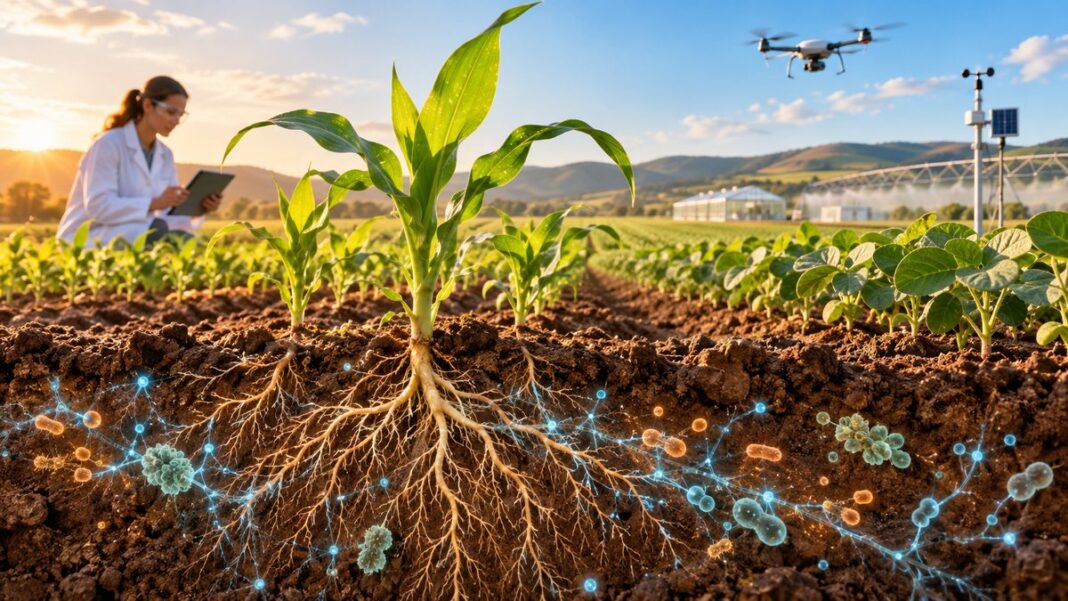

Synthetic biology can help agriculture produce resilient crops, useful microbes and new food ingredients with greater precision. It combines biology with engineering methods to design or improve living systems. However, each application still needs field testing, safety review and responsible oversight.
How synthetic biology works in agriculture
Researchers begin by identifying a useful biological function. They may study drought tolerance, pest resistance or nutrient production. Next, they test whether a genetic change or designed microbe can deliver that function reliably. This approach can complement plant breeding rather than replace it.
Regulators assess products according to their traits and intended use. In the United States, the USDA biotechnology program explains how genetically engineered organisms are reviewed for plant-health risks. The FDA agricultural biotechnology guidance describes its role in food and feed safety.
Synthetic biology for difficult crop conditions
One goal of synthetic biology is to help crops cope with drought, heat, salinity or flooding. Scientists can identify genes linked to stress responses and test targeted changes. As a result, farmers may gain varieties that maintain yields during difficult seasons. Performance can still vary by soil, climate and farm practice, so local trials matter.
Pest and disease resistance is another major use. A resistant crop may reduce losses and, in some settings, lower pesticide use. Yet resistance can weaken when pests adapt. Therefore, farmers need integrated pest management, crop rotation and monitoring alongside the seed technology.
Microbes, nutrients and food production
Engineered or selected microbes can support plants near their roots. For example, researchers study microbes that improve nutrient availability or help plants handle stress. These tools could reduce some inputs, although they must remain effective outside controlled laboratories.
Biotechnology can also change a crop’s nutritional profile. Developers may increase a useful nutrient or reduce an unwanted compound. Our guide to genetically modified organisms explains the broader benefits, risks and governance questions.
Synthetic biology benefits must be tested against risks
Synthetic biology may improve efficiency, but a promising laboratory result is not proof of farm-scale value. Researchers must check environmental effects, gene flow, non-target organisms and long-term performance. They also need to consider seed access, farmer choice and who benefits from the technology.
Climate resilience deserves similar care. A biological tool may help a crop survive stress, yet it cannot replace soil health, water management or emissions cuts. See our overview of synthetic biology and climate change for that wider context.
What comes next
The strongest projects start with a clear farming problem and compare biological tools with practical alternatives. Developers should publish evidence, involve farmers early and monitor results after release. Meanwhile, regulators and researchers need transparent methods for evaluating new organisms.
Used carefully, synthetic biology can become one part of a more resilient food system. Its value will depend on measurable farm outcomes, credible safety evidence and fair access—not novelty alone.