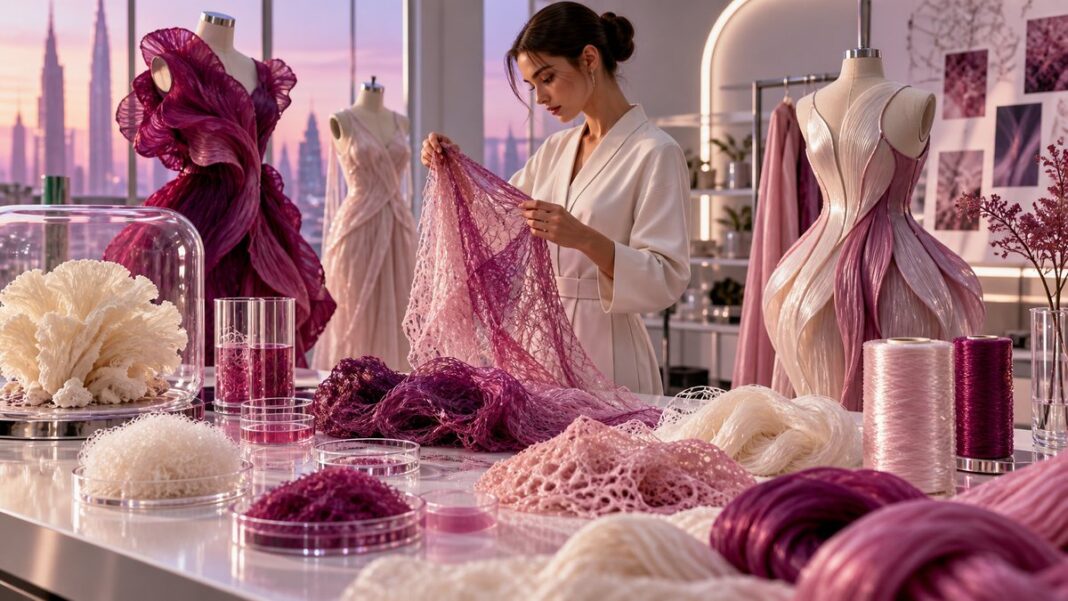

Synthetic biology in fashion is creating new options for fibres, dyes, leather-like materials and performance fabrics. Instead of relying only on crops, animals or petrochemicals, researchers can use microbes and engineered biological processes. The opportunity is significant, but every material still needs evidence on cost, durability, safety and environmental impact.
How synthetic biology in fashion works
Developers first identify a useful biological function. A microbe might produce a pigment, protein or polymer. Scientists then improve the production process and test whether the output can meet textile requirements. This work connects laboratory biology with design, manufacturing and supply-chain decisions.
The environmental case must be measured across the full life cycle. The European Environment Agency textile overview describes the sector’s resource use and pollution pressures. For synthetic biology in fashion, bio-based does not automatically mean low impact, because fermentation, purification and finishing can also consume energy and materials.

Bio-based fibres, dyes and leather alternatives
Microbial fermentation can produce proteins and other molecules that become textile inputs. Other teams are exploring pigments made by biological systems. These processes may reduce dependence on some conventional inputs, especially when production uses renewable energy and efficient feedstocks.
Leather-like materials are another active area. Companies can grow fungal structures or produce proteins that mimic selected properties of animal leather. Yet appearance alone is not enough. A useful material must withstand abrasion, moisture, repeated use and cleaning without creating new waste problems.
Responsive and functional clothing
Biological materials could support clothing that responds to heat, humidity or movement. Researchers also study fabrics with sensing, antimicrobial or protective functions. These concepts are promising, although laboratory demonstrations may not survive mass production or everyday wear.
Performance claims for synthetic biology in fashion require careful testing. Products that contact skin need appropriate safety assessment, while any living component needs containment and stability controls. The US EPA biosafety resources provide background on managing risks in biological research.
Scaling synthetic biology materials
Cost is often the largest barrier. A material that works in a small fermenter may become expensive when production, purification and quality control expand. Brands also need reliable suppliers and clear specifications. Our guide to synthetic biology in manufacturing explains related scale-up questions.
Durability creates a second trade-off. A biodegradable item may be attractive at the end of its life, but it must remain stable during normal use. Designers therefore need to match material properties with the product’s expected lifespan and disposal route.
What responsible adoption looks like
Fashion companies should compare new materials with credible alternatives, not only with the worst conventional process. They should disclose test methods, energy sources, feedstocks and end-of-life assumptions. Independent verification can help buyers separate measurable improvements from vague sustainability claims.
The same discipline applies across industries. Our article on synthetic biology in agriculture shows why local conditions and practical outcomes matter. Used carefully, synthetic biology in fashion can widen the designer’s toolkit. Its long-term value will depend on transparent evidence, responsible production and products that people can actually use.